
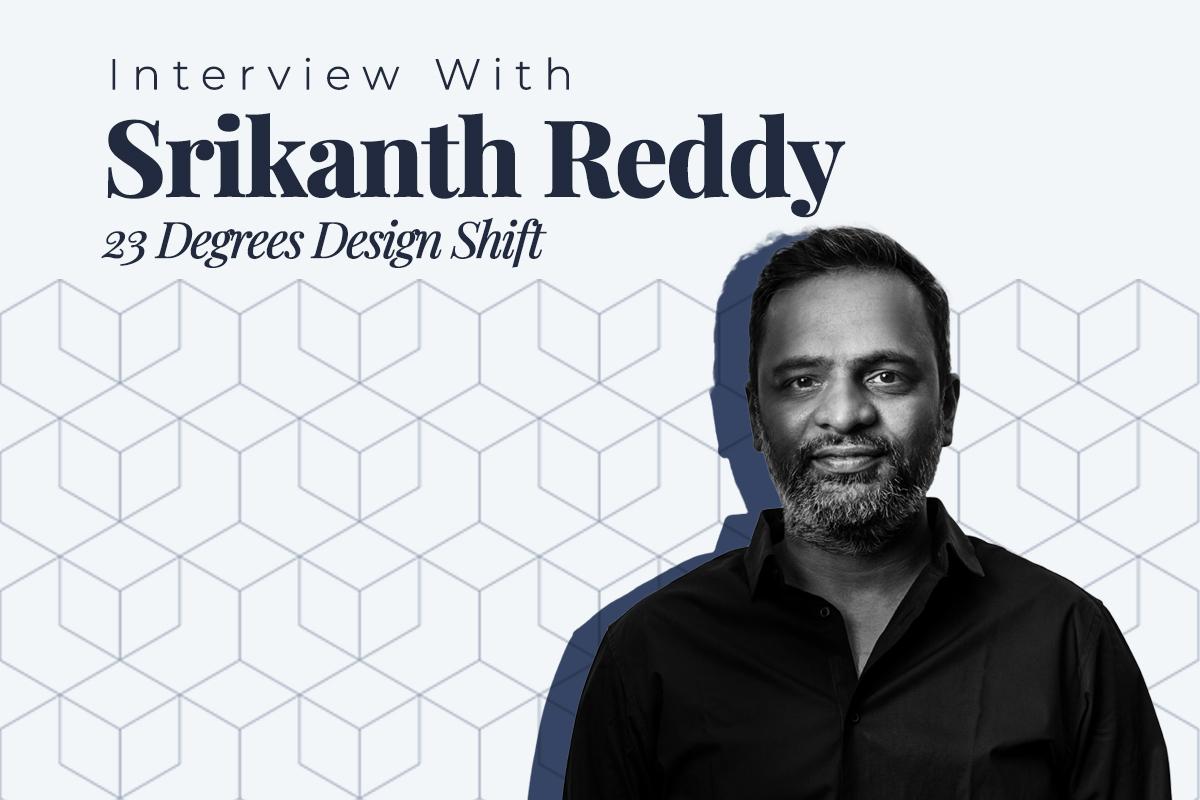
An interview with Architect Srikanth Reddy of 23 Degrees Design Shift (23DDS) - The Jury of Tiny House 2025 Architecture Competition
Jury
20 Feb 2026
We would like to take this opportunity to introduce you to our jury member of the Tiny House 2025 Architecture Competition.
We’re delighted to speak with "Srikanth Reddy", Principal Architect and Co-founder of 23 Degrees Design Shift (23DDS), an architectural studio based in Hyderabad. With roots in Guntur and an early passion for sketching, his path to architecture was shaped by both personal interest and his mother’s encouragement.
He earned his Bachelor’s in Architecture from JNTU, Hyderabad, and went on to gain valuable experience during his early career in Hyderabad and Bangalore. In 2010, he founded 23DDS and has since worked on a number of residential, hospitality, office, and multidisciplinary projects across the city. Srikanth’s design philosophy is grounded in empathy, practicality, and responsiveness to context: eschewing trends in favor of thoughtful, site-specific solutions.
He believes architecture is a continuous process of inquiry rather than a fixed style, and his work reflects a commitment to sustainable, meaningful design.
We're excited to speak with him about his perspective on the field of architecture and his expectations from the participants of the Tiny House 2025 Architecture Competition. For the purpose of this interview, he would be referred to as SR in responses, however, Volume Zero is referred to as VZ.
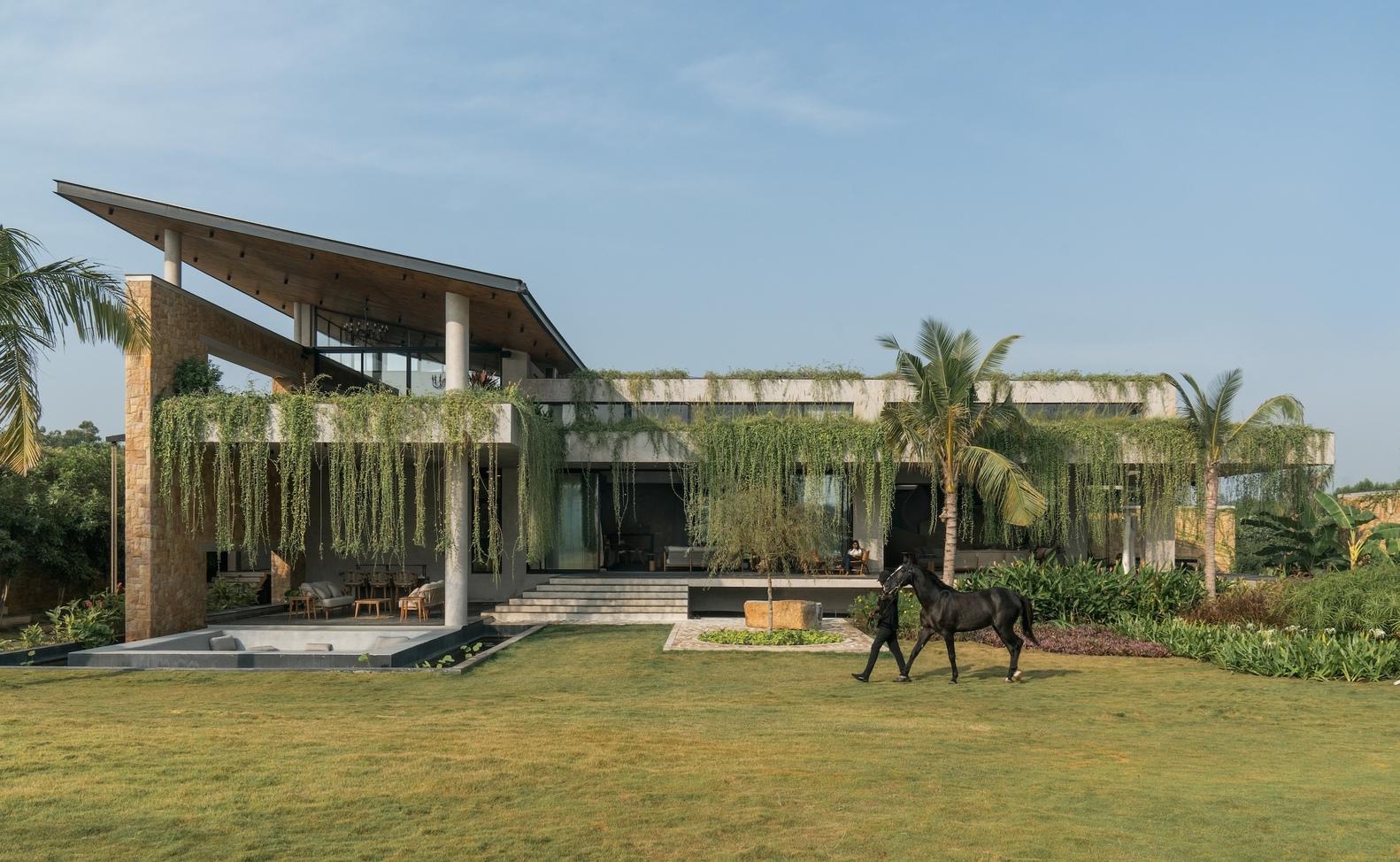
Antriya House
VZ- What are some of your favorite projects/projects that you worked on?
SR- One project that remains especially close to me is Antriya, a holiday home in the suburbs of Hyderabad. What made it particularly meaningful was how closely the design aligned with the client’s brief.
VZ- What has been your most challenging project?
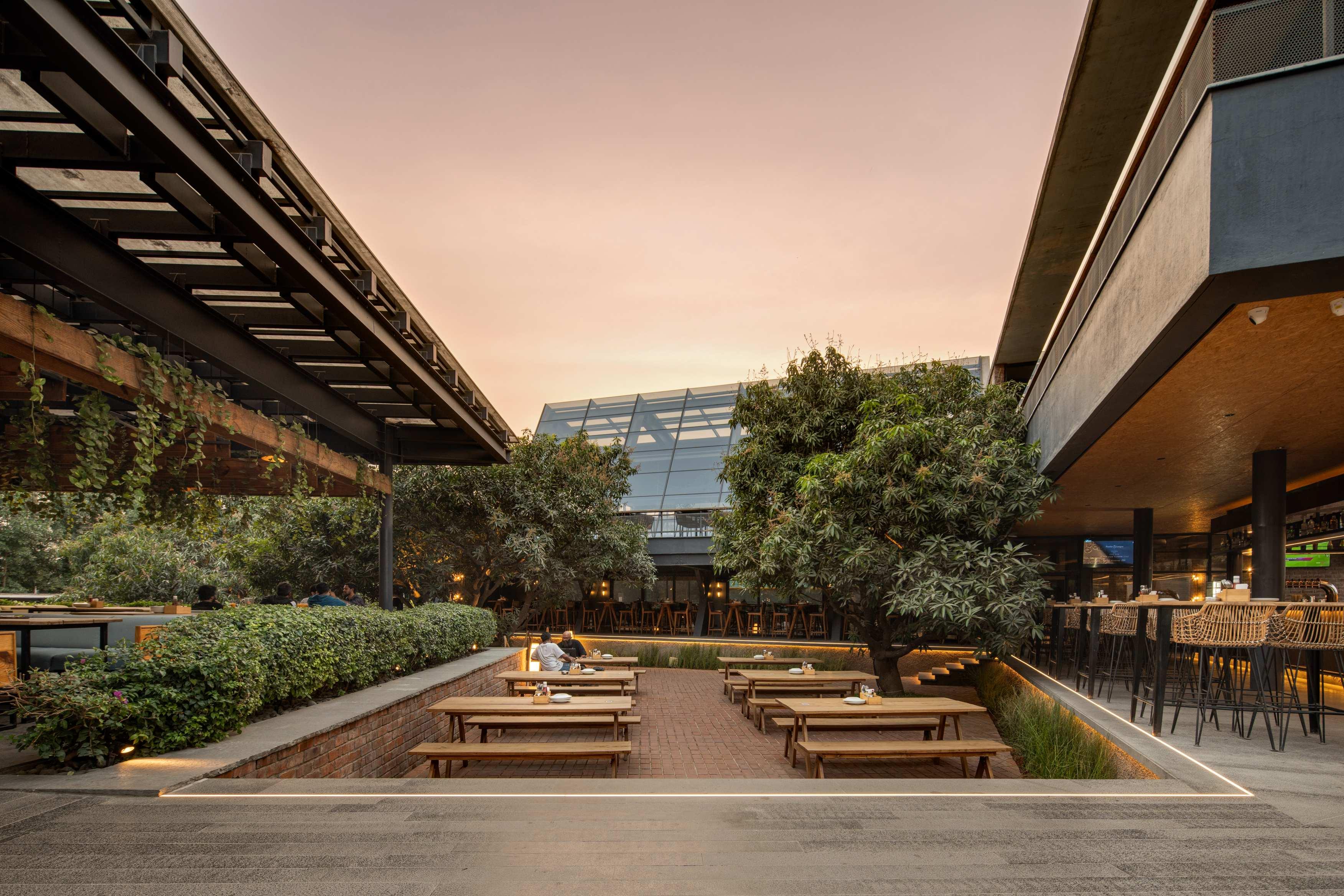
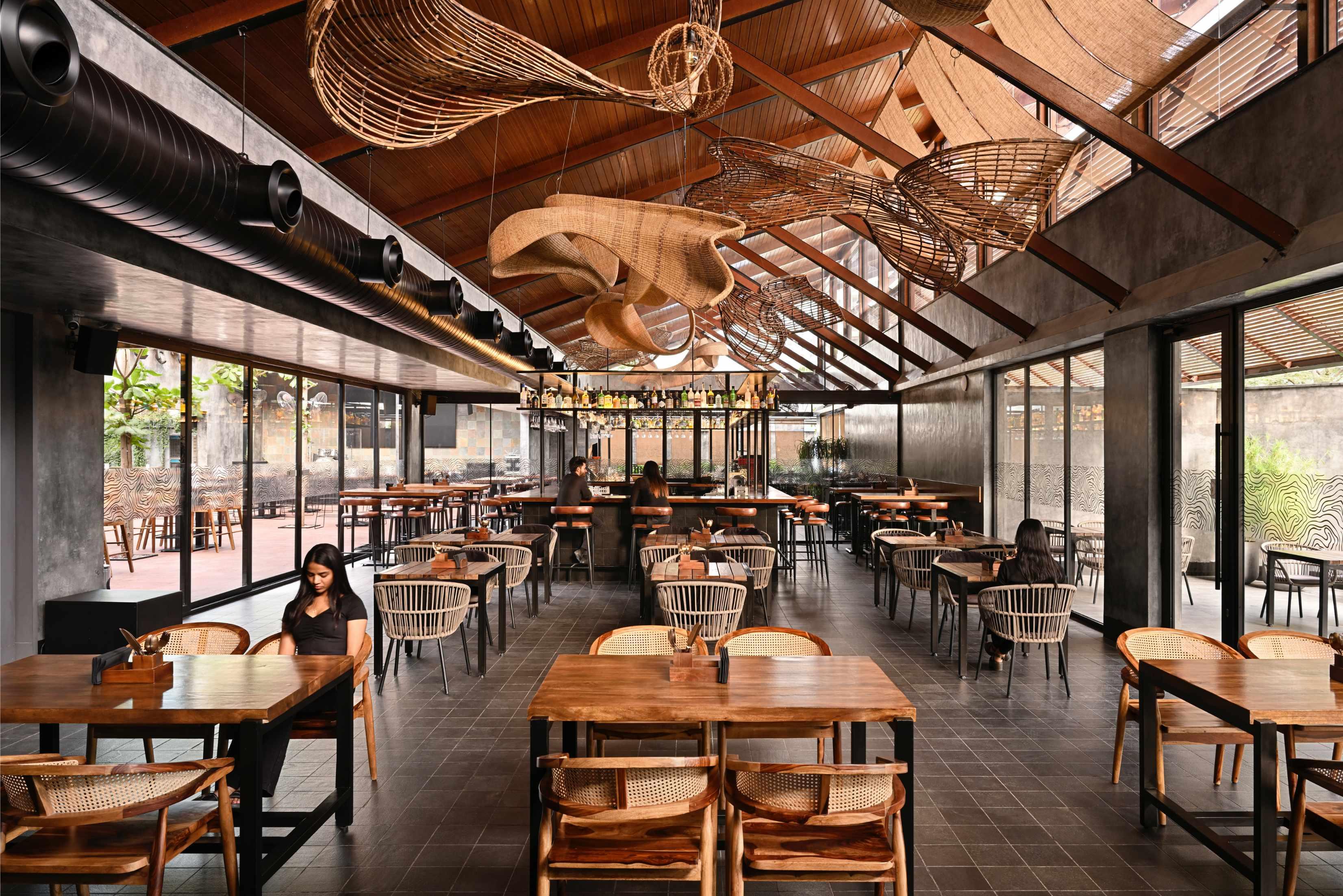
SR- Every project brings with it a distinct set of challenges, so choosing one can never be straightforward. However, if one were to be highlighted, it would be Zero40, our brewery project in Hyderabad’s Financial District. The primary challenge lay in building around ten existing mango trees, with a conscious decision not to trim their foliage. This required the architecture to respond with humility to what was already there. The way the building tapers to accommodate tree growth, how sunken courtyards respect the site’s gradient, the introduction of a curved wall to break strong geometries—these moves reflect our approach to creating architecture that enhances rather than dominates its surroundings.
VZ- What would be your word of advice for all the young budding students andarchitects who are looking to make a mark in this professional world?
SR- Develop patience with the process. Architecture is a slow art truly understanding a site, a client’s needs, and the potential of materials takes time and careful observation. Learn to listen before proposing solutions. Other than that, travel plays a crucial role in experiencing & learning good architecture.
VZ- What are you expecting from the proposal and the participants for the Tiny House 2025?
SR- I want to see how participants begin by constructing a clear narrative that defines their parameters concerning site, client & experience, because they have the freedom to assume all three. And then translate these parameters into spatial decisions, functionality, & overall design resolution. The strength of the proposal for me lies in how convincingly the narrative & the design reinforce each other.
VZ- Is there any aspect of the brief that appeals to you the most or do you find it the most challenging?
SR- Apart from the area limitations, the briefing is relatively open-ended. Having no constraints is more challenging. When constraints are clearly defined, design becomes a calibrated response to those parameters. But in an open-ended brief like this, the participants have to establish their own set of constraints like the client, site, experience, before designing in them. Defining this internal framework and designing within it is going to be challenging & engaging.
VZ- How do you approach the idea of designing a Tiny House in today's world?
SR- I think I’d hold onto the core idea of home, especially a tiny one, as being an intimate and deeply personal space. Rather than trying to accommodate every possible activity (like an office, workout space or the like), I’d see it as an escape, an intentional counterpoint to the highly collaborative, hyper-connected lives we lead today. So, my design would prioritize moments of solitude, reflection and personal rituals over generic multi-functionality. Not fewer functions, but clearer priorities.