
An interview with Architect Shabna K of Zero Studio - The Jury of Tiny House 2025 Architecture Competition
Jury
03 Dec 2025

We would like to take this opportunity to introduce you to our jury member of the Tiny House 2025 Architecture Competition.
We’re delighted to speak with "Shabna K", a trained architect and urban planner who currently leads Zero Studio, an architecture practice based in Kozhikode, Kerala. For over a decade, Zero Studio has been known for its thoughtful approach to architectural practice-rooted in original finishes, respect for the local narrative, and a
strong sense of tropical identity.
As an educator, she serves as a visiting faculty member at MES College of Architecture, Kozhikode, nurturing young minds and sharing her professional insights. Beyond architecture, Shabna is an entrepreneur and co-owner of Beondspace, a bespoke furniture venture offering customized and affordable designs for the discerning market.
Balancing her roles as an architect, teacher, entrepreneur, and mother, Shabna calls herself a full-time thinker - someone who, through her varied pursuits, continues to explore and contribute to the evolving landscape of design and society.
We're excited to speak with her about her perspective on the field of architecture and her expectations from the participants of the Tiny House 2025 Architecture Competition. For the purpose of this interview, she would be referred to as SK in responses, however, Volume Zero is referred to as VZ.
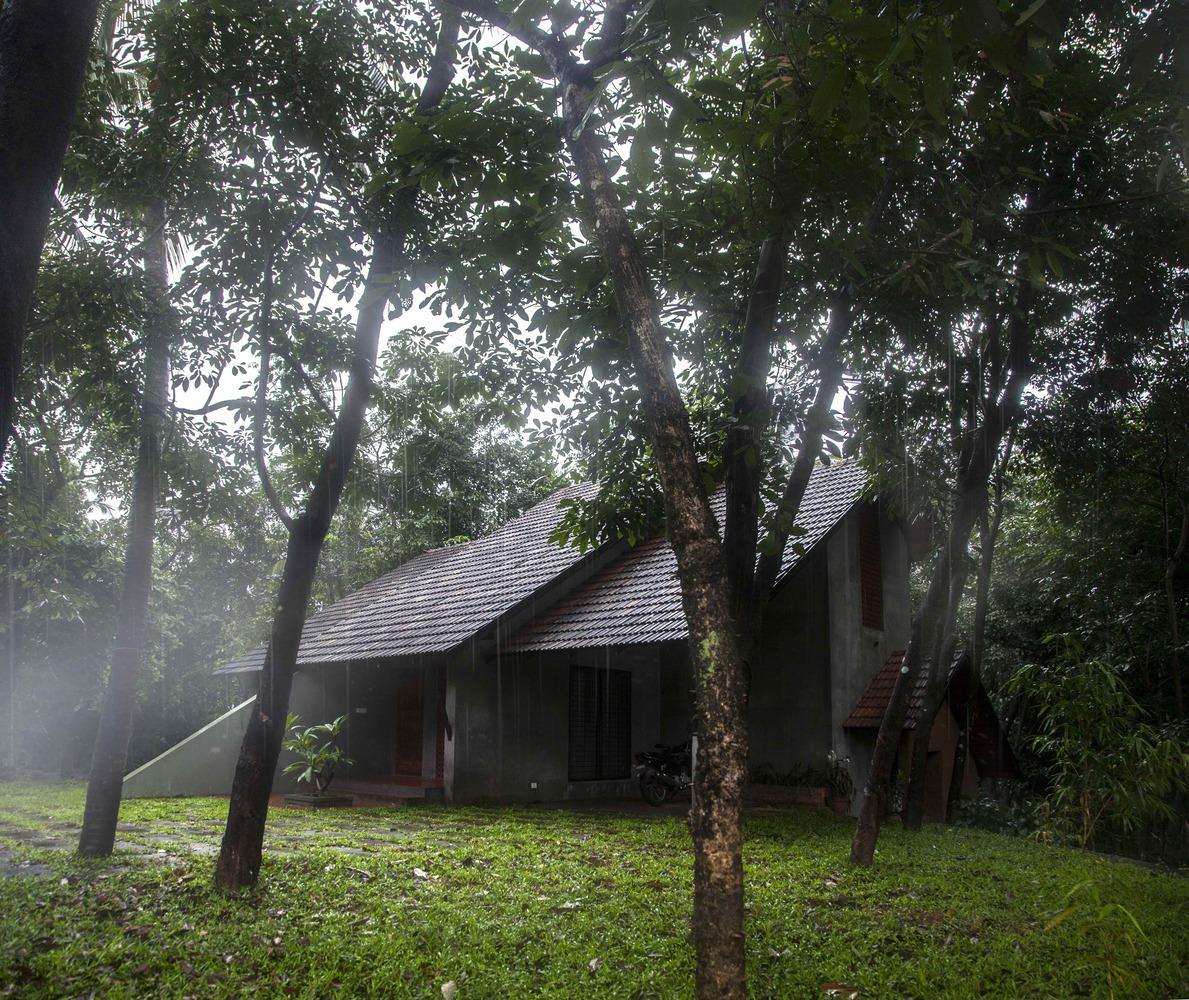
Mausam - House of the Seasons
VZ- What are some of your favourite projects or projects you worked on? What were the most exciting parts?
SK- Every project becomes a learning ground, though a few stay with you because they shift the way you think. For me, the most meaningful works are those where architecture becomes a quiet conversation with its context-not just physical, but emotional and cultural as well. In that sense, every project is special, and choosing just one is difficult.
But there is one project that has never left me, partly because I am deeply connected to it and partly because my parents live there. Mausam – The House of Seasons has stood witness to our lives, sometimes as a gentle backdrop and sometimes as an active participant helping us through both ordinary days and difficult ones. It was built during the early formative years of our practice, and designing your own home is not something that comes often in an architect’s career. It became even more meaningful because it was created for my parents to spend their retired life in. All of us daughters live far away and visit only occasionally, so the house had to be carefully tailored to its primary users, yet flexible enough to welcome the rest of us in our own ways whenever we returned. I feel fortunate to experience it both as the architect and as one of its users.
If you ask me what the most exciting part of any project is, I would say it is the moment when the clients and we begin to build a narrative together-when we realise that our vision aligns with what they had quietly imagined. This alignment rarely arrives in a single dramatic moment; it appears gradually, often in between conversations or during a casual site visit. But when it does happen, it is one of the most gratifying aspects of the entire process.
Across all our projects, the joy lies in reading the site, understanding its hidden intelligence, and shaping a built form that feels almost inevitable-something that truly belongs.
Screen - The Lantern House
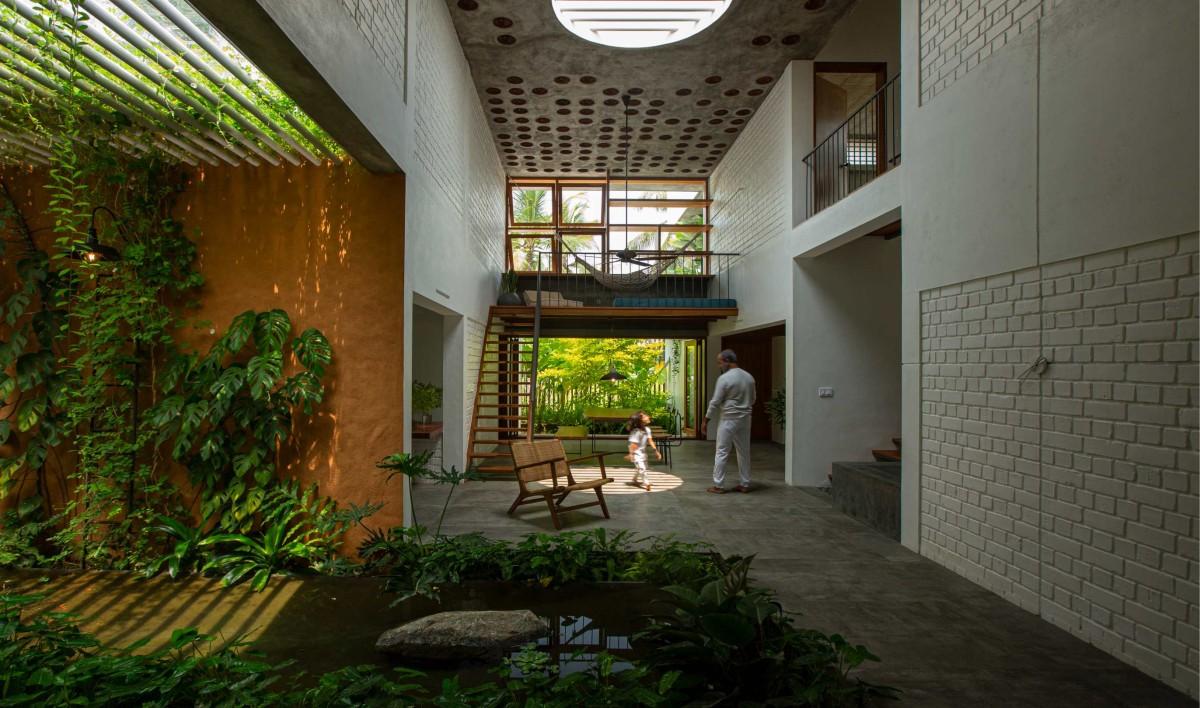
VZ- What has been your most challenging project? What were the challenges—topography, climate, structure, clients, people…?
SK- I would say that every project comes with its own set of challenges. Stepping into someone else’s shoes-thinking for them, understanding their needs, and getting it right-is never easy. You often encounter conflicts between what you believe is right and what the person you are designing for feels is right. And I think it’s honest to admit that something is always lost in translation. Every architect will agree with this. Yet, in that same process, there is also the possibility of discovering new meanings and richer layers you didn’t anticipate.
The projects that become the most challenging are usually the ones where nature, people, context, and ambition intersect in complex ways. During my Master’s programme, I was trained in social housing, which allowed me to closely study many public housing projects. I also had the opportunity to survey residential satisfaction levels among the inhabitants of one such development. What struck me was that even in seemingly perfect, well-designed solutions, many residents felt a sense of alienation. This may not be true for every project, but it is something we cannot ignore. It taught me that from project to project, we must keep learning and unlearning, constantly re-evaluating what we assume to be “good design.”
Later, our studio became involved in a housing project for a tribal community, and that experience deepened this understanding even further. We realised that such contexts involve complex, intertwined layers-cultural, social, and ecological, and none of them can be viewed in compartments. The overlaps are where the real challenges lie, but also where the most meaningful design conversations emerge.
VZ- What is your advice for budding architects and students hoping to make a mark?
SK- Stay curious, stay grounded, and stay kind-to the site, to people, and to yourself. Keep observing and seeking, because so much of what we learn in this profession comes quietly, in moments we least expect. Travel whenever you can; places and people have a way of teaching us things that no classroom ever can. And above all, listen more than you speak, because every conversation carries a layer of wisdom if you are patient enough to hear it.
It has taken me almost a decade after graduating to understand that architecture is not a chase for iconic forms or dramatic gestures. It is a slow, evolving discipline shaped by everyday observations, small acts of patience, and a sincere attempt to understand how people live. When you begin to truly notice how people occupy a space-how they rest, work, adapt, celebrate, or simply pause-your work naturally starts gaining meaning and relevance.
Even then, the journey is never complete. With each project, you grow a little, unlearn a little, and discover something new about yourself and the world around you. I have come to realise that we are all constantly shifting and becoming-always a work in progress-and there is something very grounding and beautiful in that.
Residence at Edavanna
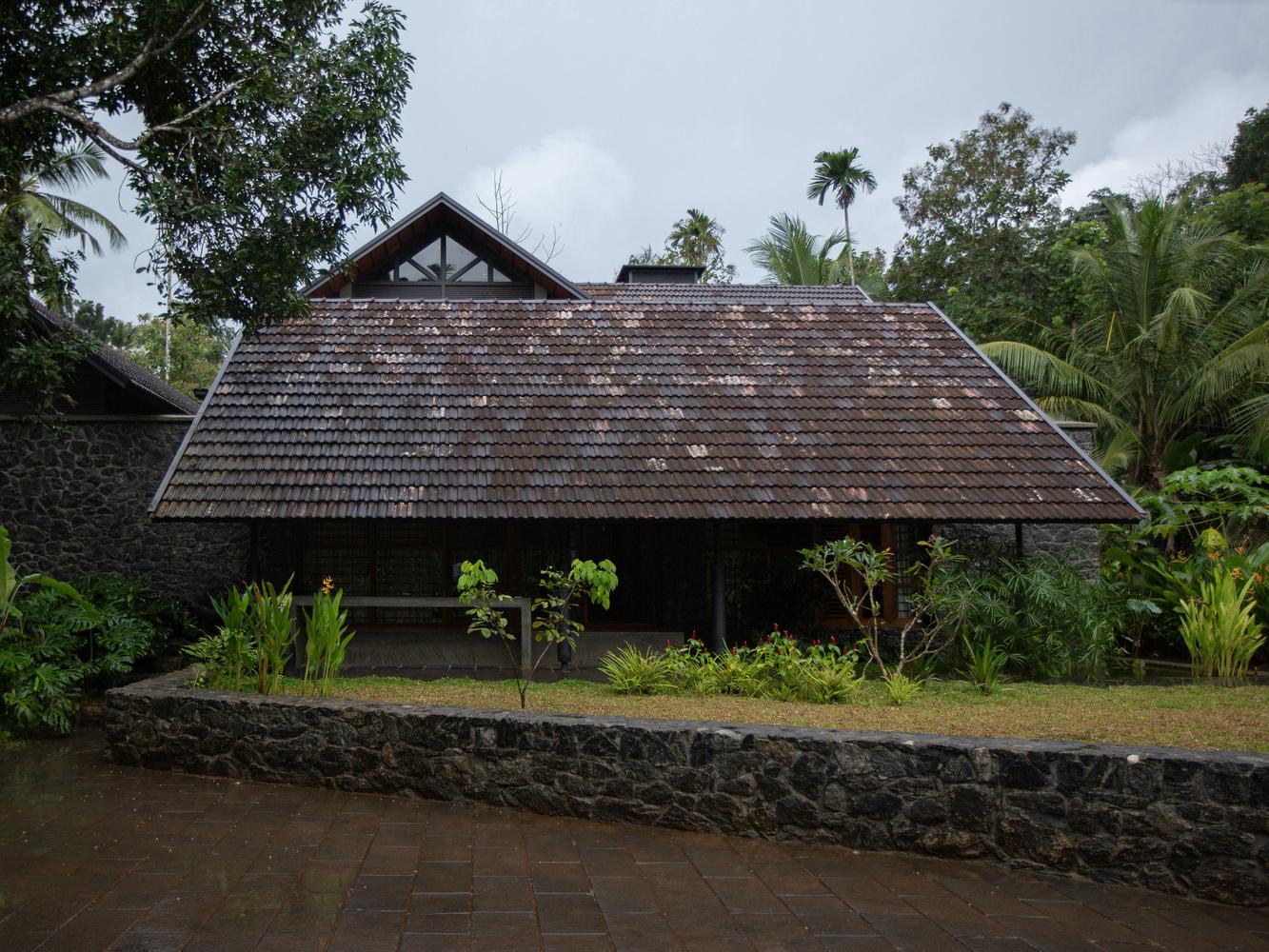
VZ- What are you expecting from the proposals and the participants for Tiny House 2025?
SK- For Tiny House 2025, I’m looking for ideas that move beyond simply minimising area. A tiny house should be conceptually clear, spatially intelligent, functionally layered, emotionally resonant, and rooted in its context. I hope participants explore how small spaces can expand through experience, how honest materials and thoughtful light and ventilation can elevate simplicity, and how a small footprint can still hold a powerful idea. In the end, clarity of thought matters far more than complexity of form.
VZ- Is there any aspect of the brief that appeals to you the most or that you find most challenging?
SK- The most interesting aspect of the brief is the area restriction-the kind of constraint that truly forces creativity. In a tiny house, every millimetre becomes a decision, and that level of spatial economy often reveals the designer’s real clarity.
Equally challenging and exciting is the question of adaptability: how a single space can shift functions through time, hold different activities, and still feel calm and uncluttered. I’m also drawn to the idea of creating small, meaningful moments- a framed view, a low sill, a pocket garden, or a skylight that quietly transforms the interior.
VZ- How do you view the act of designing a Tiny House today? What would your approach be?
SK- Designing a tiny house today speaks to an urge for slower living, responsible building, and mindful consumption. People are seeking mobility, simplicity, sustainability, and a closer relationship with nature, and a tiny house becomes a quiet response to all of these shifts.
For me, the process would begin with understanding the user’s everyday rituals-how they rest, cook, pause, store, and move. The site must also be allowed to speak, whether it wants to frame a view, capture the breeze, or simply sit lightly on the land. Materials should be chosen with intention, keeping them local, repairable, and warm. Flexibility becomes essential, with elements performing multiple roles without feeling like compromises. And above all, the small moments matter the most, because in a tiny house, details become the architecture.
Ultimately, a tiny house should feel liberating rather than limiting- a small footprint with a spacious soul.